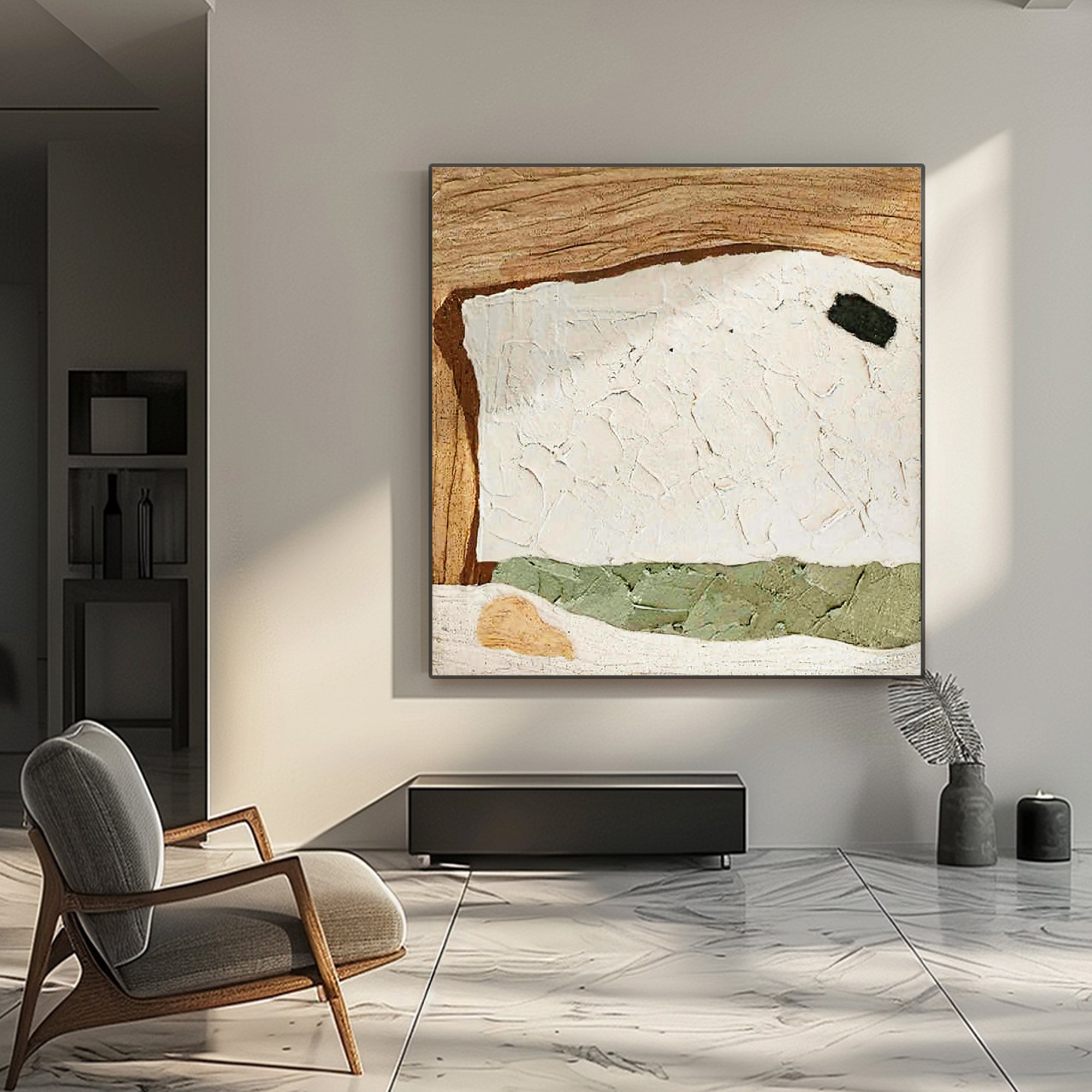
What Is Scandinavian Wall Art?
Scandinavian design emerged from a specific cultural and climatic context: long winters, limited daylight, and a deep relationship with the natural landscape shaped an aesthetic that prioritised warmth, function, and the quality of indoor life. The guiding principle — that beauty and utility are not opposites but expressions of the same intention — produced a design language that remains one of the most influential in the world. Scandinavian wall art carries this philosophy directly: works that are resolved without being cold, minimal without being empty.
In contemporary interiors, Nordic wall art has become a defining element of the Japandi and modern minimalist aesthetic, bringing the particular quality of Nordic light — soft, even, and diffuse — into homes that may have little of it.
The Visual Language of Scandinavian Wall Art
Nordic art is characterised by restraint across every compositional element: limited colour, generous negative space, and organic forms drawn from the natural world — stone, branch, water, open landscape. These are not decorative choices; they reflect a design culture that understands simplicity as the result of careful editing, not absence of thought.
The palette in Scandinavian paintings runs from warm whites and natural linens through soft greys, muted sage, and deep charcoal — colours that recall Nordic interiors in winter light. Surface texture is present but understated: enough tactile depth to prevent the work from feeling clinical without disrupting its essential quietness.
How Scandinavian Art Affects a Space
A Scandinavian work brings a particular quality of stillness into a room — not the enforced quiet of minimalism, but the natural quiet of a space thoughtfully composed. Its restrained palette reduces visual noise; its organic forms introduce a reference to the natural world that softens the harder edges of contemporary architecture.
Nordic wall art pairs naturally with materials that share its sensibility: linen, pale timber, natural stone, and matte ceramics. It works as a single statement piece or in carefully spaced pairs, and is particularly effective in spaces with strong architectural clarity — open-plan living areas, bedrooms designed around rest, and home offices where visual calm supports sustained focus.
Why Hand-Painted Scandinavian Art Works Differently
The Scandinavian design tradition has always valued the evidence of the human hand — the slight irregularity of a thrown ceramic, the grain in unfinished timber, the mark left by a tool on a worked surface. These are not imperfections; they are the qualities that distinguish objects made with care. Hand-painted Nordic art carries this value directly: the surface holds the trace of its making in a way that a mechanically produced surface cannot.
In practice, this means subtle tonal variation within a single colour field, slight texture that catches light softly, and an overall surface quality that reads as genuinely crafted — art that speaks the same material language as the space around it. In a room, it settles rather than asserts, and grows more rewarding the longer it is lived with.
What to Look for When Choosing a Scandinavian Painting
The most important quality is tonal coherence. In Nordic wall art, the palette should feel unified — colours that belong to the same natural world. Whites should carry warmth; greys should lean organic rather than industrial; greens and earth tones should feel found rather than chosen.
Assess the quality of negative space. In Scandinavian composition, what is absent is as considered as what is present — empty areas are active compositional elements that give the work its characteristic openness and calm. A work where negative space feels incidental will lack the essential Nordic quality: the feeling that everything is exactly where it should be.
Spaces That Suit Scandinavian Wall Art
Living Room — above the sofa against a white or light grey wall: A Scandinavian canvas above the sofa reinforces the room's architectural quietness. Pale linen upholstery, natural timber furniture, and matte ceramics share the same visual language — the art anchors the composition without competing.
Bedroom — centred above the headboard: Nordic art above the bed creates a thoughtfully composed retreat. Works in warm white, soft grey, or muted sage bring the quality of diffuse Nordic light into the sleeping space — calm, even, and conducive to rest.
Home Office — on the wall directly facing the desk: The visual clarity of Nordic wall art supports sustained focus. Its restrained palette holds the peripheral vision without distraction throughout the working day.
Hallway — on the end wall facing the approach: A single Scandinavian work in a hallway sets the tone for the interior before any other room is entered — its quiet authority signalling a home composed with care.
All Lumi Gallery Scandinavian works are hand-painted originals on museum-grade canvas, crafted using eco-friendly acrylic and mixed media. Each piece carries its own natural variation in texture and tone — no two are identical.